Planning a road trip through South France? You’ve come to the right place. South France is one of our favorite destinations in the country. The summer weather is fantastic, and you can choose between camping, a B&B, or renting a holiday home for a few days. Plenty of options in South France.
Based on our own travel experiences, we’ve put together a 10- and 14-day itinerary through South France for you. In this article, we also share our favorite spots and lots of practical tips to make your family vacation as relaxed as possible.

Practical tips for South France
A road trip through South France is ideal if you love sun, nature, charming villages, and water fun. The distances are all manageable, there are plenty of family-friendly campsites, and you can easily combine the region with other parts of France.
- Best time to visit South France: In summer, daytime temperatures can easily exceed 30°C (86°F). Plan walks and village visits early in the morning or later in the day, and take a siesta during the hottest hours. May, June, September, and October are the best months, though not everyone has vacation time then.
- How to reach South France: You can fly to Paris and then take the high speed train to Avignon or drive from Paris to the South France.
- Transport in South France: The easiest option is to have your own car or rent one through Discover Cars. You can also use public transport, but some smaller villages are harder to reach that way.
- Where to stay in South France: South France is a paradise for families who enjoy camping or glamping. You’ll find plenty of campsites with pools, glamping accommodations, and vacation homes.
- South France’s top attractions: the lavender fields at the foot of Mont Ventoux, the spectacular Gorges du Verdon, the picturesque villages of Gordes and Roussillon, the papal city of Avignon, Marseille, and the Camargue.
- Fun activities in South France: kayaking in the Gorges du Verdon, swimming in Lac de Sainte-Croix, cycling up Mont Ventoux, and donkey trekking from Cornillac.
- Hidden gems in South France: L’Isle-sur-la-Sorgue with its canals, Roquebrune-sur-Argens with its rock, and Tourtour, the village in the sky.
- Stay connected in South France: Buy an eSIM for France with a 5% discount) so you’re always connected.
- Budget tip: France currency is Euro. You can reduce transaction fees, for example when withdrawing cash or paying at a restaurant, by using a Wise account linked to a debit card. You can request a free Wise debit card here.
Other frequently asked questions about South France
Is South France suitable with young children?
Yes, South France is very suitable for babies, toddlers, and preschoolers, as long as you account for the heat and don’t pack too much into one day. Preferably choose campsites or accommodations with shade, a swimming pool, and short driving distances to South France’s top attractions.
Is a Road Trip in South France Expensive?
South France isn’t a cheap destination, but you can keep costs well under control by camping, cooking yourself, and traveling outside peak season. Eating at markets and going on picnics is often cheaper and super fun too.
Can you combine South France with other regions?
Yes, certainly. South France is often combined with the Ardèche, the Côte d’Azur, or the French Alps. If you have more than two weeks, you can make a nice loop through multiple regions.
Do you need a car in South France?
For a real road trip through South France and to reach the most beautiful villages, lavender fields, and nature spots, a (rental) car is almost essential.
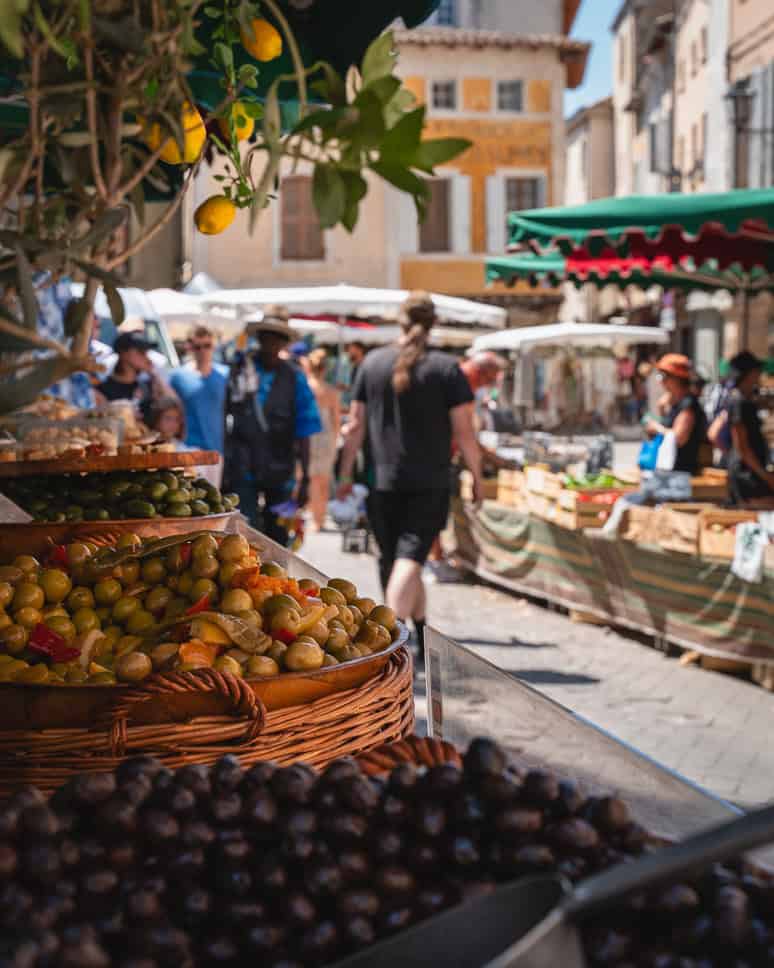
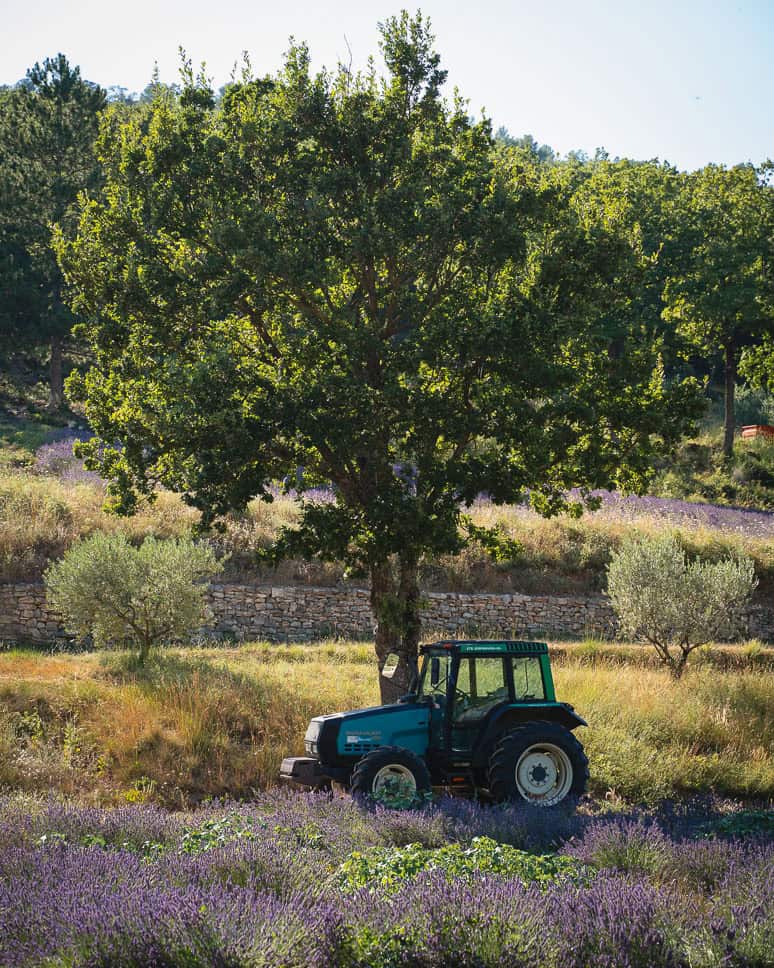
Overview of our South France road trip
To give you an idea of what a road trip through South France might look like, here’s an overview of a sample route with our favorite spots.
- Avignon and Luberon Villages (3 nights): atmospheric cities and photogenic hilltop villages like Gordes and Roussillon.
- Gorges du Verdon & surroundings (3–4 nights): rivers, lakes, and spectacular views.
- Camargue (2–3 nights): wild horses, flamingos, and long sandy beaches.
- Marseille and the Côte d’Azur: Calanques/Cassis (2–3 nights): port city, boat trips, and stunning bays along the coast.
You can easily shorten this route to one week or extend it to three weeks, depending on your travel pace.
How many days do you need for South France
How much time you need in South France depends on your travel style and which attractions in South France you want to see.
- 10 Days in South France: Choose two regions, for example Luberon + Gorges du Verdon or Gorges du Verdon + Camargue.
- 14 Days in South France: You can choose to stay a few extra nights everywhere or include Marseille/Cassis or Mont Ventoux.
If traveling with children, it’s nicer to switch accommodations less often and make day trips from 2 or 3 bases.
Sample south France road trip itinerary

Road Trip Itineraries: 10 and 14 Days in South France
Below, you’ll find two possible itineraries. See them as inspiration: you can easily adapt them to your family and interests.
10-Day South France Road Trip
Days 1–3: Avignon & Luberon Villages
Start your trip in the Avignon area or one of the Luberon villages. Explore Avignon with the Palais des Papes, walk over the famous Pont d’Avignon, and stroll through the old streets. Then head to the Luberon and visit some of the most beautiful villages.
- Gordes: beautifully built against the hill, with a fantastic viewpoint just outside the village.
- Roussillon: known for its ocher cliffs and colorful houses; perfect for a short walk with children.
- L’Isle-sur-la-Sorgue: the “Venice of South France”, with water, little bridges, and cozy terraces.
- Les Baux-de-Provence: explore the magnificent castle.
Spread the villages over two days and alternate with a playground visit, market trip, or picnic.
Days 4–6: Gorges du Verdon & Lac de Sainte-Croix
Drive on to the Gorges du Verdon, one of France’s most beautiful natural areas. Stay near Moustiers-Sainte-Marie or around Lac de Sainte-Croix.
- Rent a kayak or pedal boat on the river or lake.
- Find a quiet little beach on one of the shores.
Days 7–10: Camargue
Then drive on to the Camargue, a unique wetland area between the Rhône and the Mediterranean Sea.
- Spot flamingos in the marshes and lagoons.
- Take a horseback ride (usually from age 6) or a boat trip through the nature reserve.
- Enjoy the long sandy beaches near Saintes-Maries-de-la-Mer and surroundings.
The Camargue feels very different from the rest of South France and thus provides nice variety in your trip and the ideal finale to your South France road trip.
Itinerary South France 14 days
If you have two weeks, you can extend the route and take it easier everywhere.
Days 1–3: Avignon & Luberon villages
Start your trip in the Avignon area or one of the Luberon villages. Explore Avignon with the Palais des Papes, walk over the famous Pont d’Avignon, and stroll through the old streets. Then head to the Luberon and visit a few of the most beautiful villages:
- Gordes: beautifully built against the hill, with a fantastic viewpoint just outside the village.
- Roussillon: known for its ocre cliffs and colorful houses; perfect for a short walk with children.
- L’Isle-sur-la-Sorgue: the “Venice of Provence”, with water, little bridges, and cozy terraces.
Days 4–6: Gorges du Verdon & Lac de Sainte-Croix
Time for water fun, family activities on the water, and beautiful views.
Days 7–10: Camargue
Do the same as for the 7-day tour but now you also have extra time if needed to spot flamingos, discover beaches, and possibly make a side trip to Arles, with its Roman heritage and atmospheric streets.
Days 11–14: Marseille & Calanques/Cassis
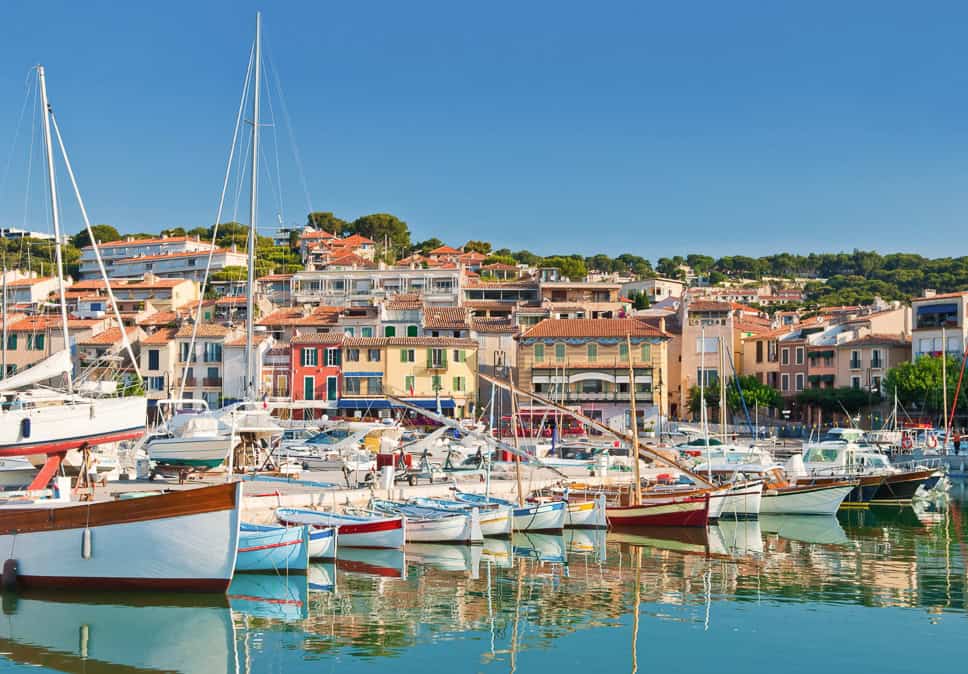
Finish your road trip by the sea, in or around Marseille and Cassis.
- Explore the old port and the colorful Le Panier neighborhood in Marseille.
- Take a boat trip to the Calanques, where you’ll find stunning bays and rugged cliffs.
- Plan a beach day or a picnic in one of the bays near Cassis.
Here you can choose for a city hotel, an apartment, or a camping near the coast.
Best travel time for a road trip in South France
You can travel to South France year-round, but not every period feels the same. For us, the best travel time is in spring (May-June) or September-October because you can avoid the heat then. During these months there are also fewer tourists to visit all the sights of South France.
In spring (April–June) you have pleasant temperatures, nature wakes up again after winter, and less crowds. Ideal for active families and lovers of hiking and exploring villages.
During the summer (July–August) you have the hottest days but also weekly markets, lavender fields in bloom, and plenty of water fun in rivers and lakes, but it’s naturally busier and more expensive.
In autumn (September–October): it’s often still warm, much quieter, and beautiful light. Perfect if you’re not tied to school holidays.
During winter (November–March) it’s very quiet everywhere, you have lower prices, but there’s naturally also less atmosphere. Fun if you e.g. want a few days in Avignon but less suitable for swimming.
For families tied to school holidays, the summer vacation, Easter break, and autumn break are the most logical choices.
How do you get to South France
Fly to major airports like Marseille Provence (MRS), Nice Côte d’Azur (NCE), or Paris CDG/Orly, then connect via TGV train or rent a car to reach Provence. Direct flights from US hubs (NYC, Atlanta, Chicago) take 8-12 hours; expect round-trip fares from $450-800 off-peak. From Paris, high-speed TGV to Avignon or Aix-en-Provence is 3 hours.
- Take the TGV high-speed train from Paris Gare de Lyon to Aix-en-Provence TGV or Avignon (about 3 hours, tickets from €30-€100). There are multiple daily connections; book early via SNCF Connect for the best price. From there, you can rent a car for Provence.
- From Marseille: TGV/TER to Avignon (30-50 min, €4-€30), Arles (20 min), or Aix-en-Provence (15 min); for Luberon villages like Gordes often a bus from Avignon or Cavaillon.
From Nice: TGV to Marseille (2.5-3 hrs, €20+), then transfer; direct TER to Aix limited, better via Marseille for Provence villages. Book via SNCF Connect; rent a car for remote villages like Roussillon. - Renting a car is strongly recommended after arriving in Provence, especially for a road trip with villages like Gordes, Roussillon, and the Luberon. Public transport (train/bus) works well between cities like Avignon, Aix, and Marseille, but remote nature spots, beaches, and hill villages are hard to reach without a car. Discover Cars
A combination of train + rental car on site is an interesting sustainable and our favorite option.
How do you travel around in Provence?
Once on site, the car is the most practical way to travel around Provence.
- Rental car: You’re flexible and can easily combine villages, lavender fields, rivers, and beaches. Be careful with narrow streets in some old villages and prefer parking just outside the center.
- Camper or van: For families who love freedom and want to move around often, a camper is ideal. Check campsites well with e.g. Park4night and possible restrictions for larger vehicles in villages.
- Public transport: Trains and buses run between major cities and some larger towns, but for typical Provençal villages and e.g. Mont Ventoux, the options are still quite limited.
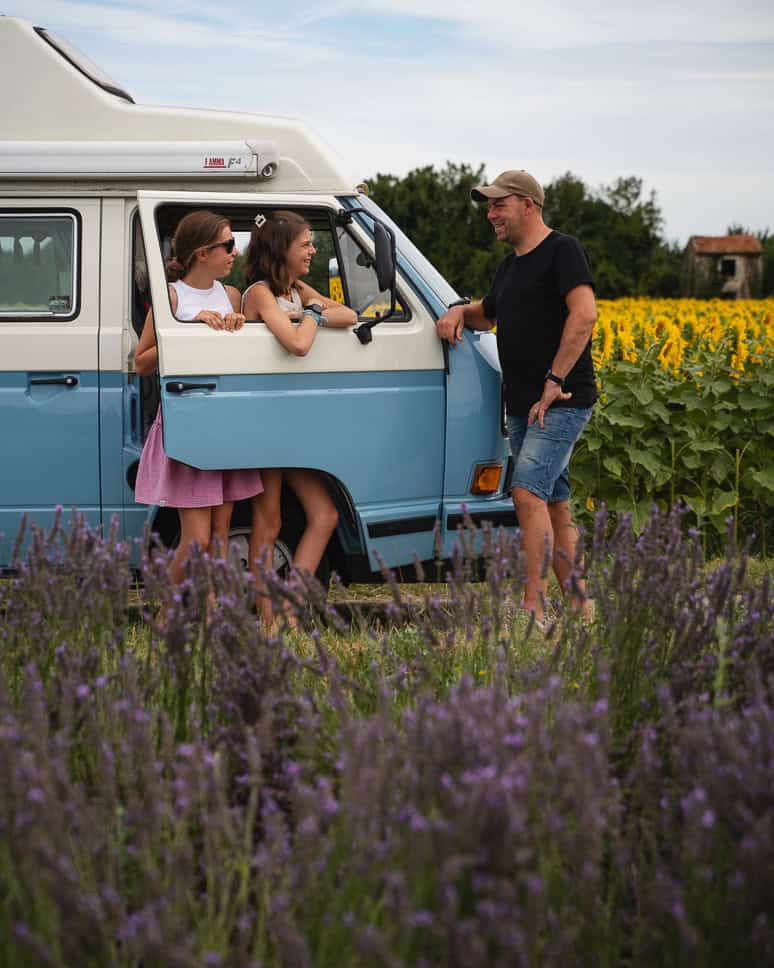
Try to limit driving distances per day; on the map it sometimes doesn’t look far, but due to the narrow roads it can take much more time. Build in plenty of breaks with nice viewpoints, playgrounds, and picnic stops. This way, your road trip through South France and the Provence with kids stays fun for everyone.
Itinerary South France
Discover Avignon, city of the popes.
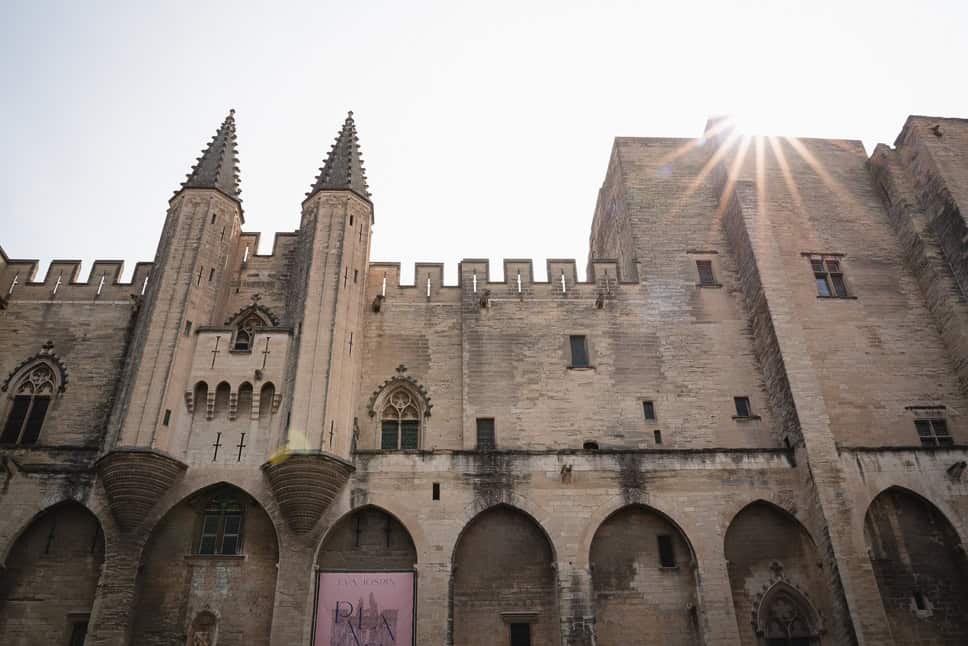
Avignon is on the edge of Provence and breathes history. In the 14th century, this – not Rome – was the seat of the popes, who resided in the impressive Palais des Papes, one of the largest Gothic palaces in the world. Be sure to go inside too (you can book a guided tour, for example, to learn more about the intrigues and daily life in the palace).
Additionally, there’s of course the Pont d’Avignon, the famous “half” bridge from the song, from which you have a nice view of the Rhône and the city. Yet it’s especially the South French atmosphere that makes Avignon so enjoyable: you stroll from square to square, sip an aperitif on a terrace, seek cooling at a fountain, and wander along the city walls and the river.
TIP: If you’re nearby in July, try to catch something from the Festival d’Avignon, one of the world’s most important theater festivals, when the whole city is full of street theater and performances.
Gordes
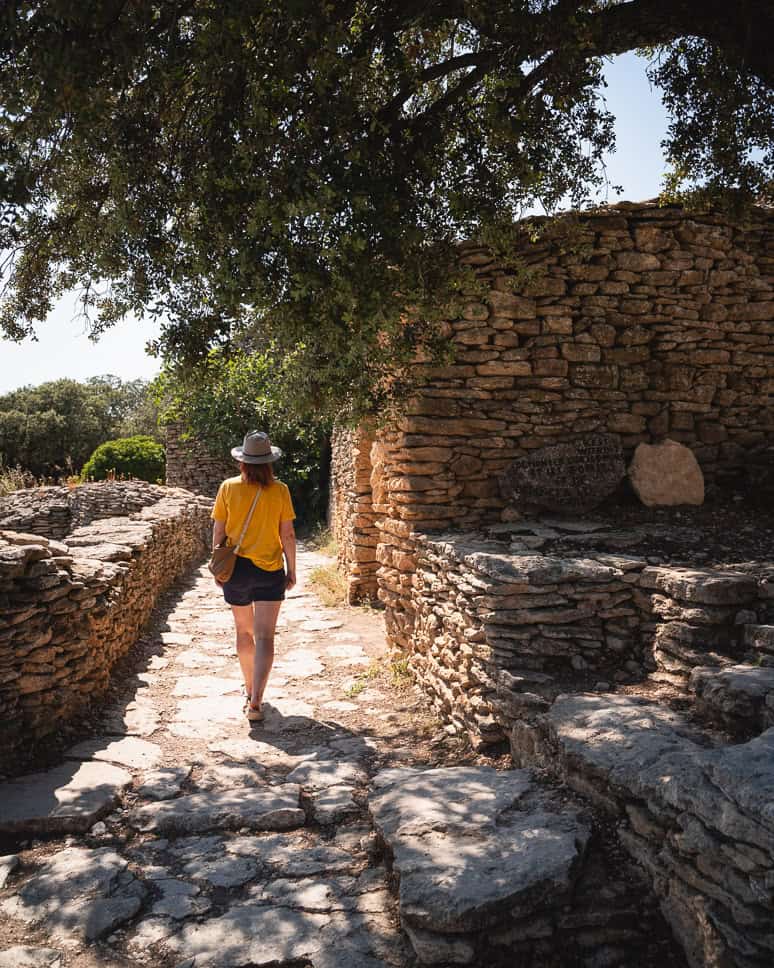
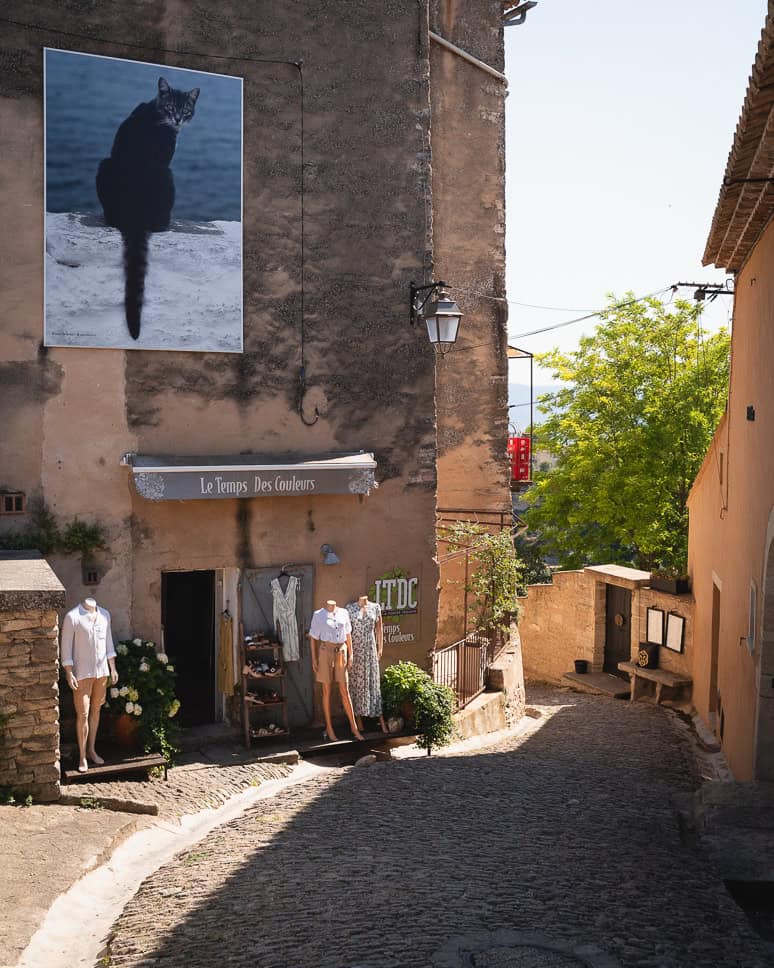
Gordes is located in the heart of the Luberon, just 7 miles from Roussillon, and is at least as photogenic—but in its own, stony version. The village clings to the hill as if glued, with houses and a castle in light-colored stone overlooking a picturesque valley, which immediately explains why Gordes appears so often in films and postcards.
In the cobbled streets you find art galleries, workshops, and fine restaurants, and although you can see the village itself in an hour, it’s easy to linger longer for lunch, some gallery shopping, or a glass of wine with a view. Try to be here around sunset, when the warm light makes the stone houses glow; in summer it’s very crowded, so in high season come preferably early in the morning or later in the evening—or choose spring or autumn.
TIP: Near Gordes there are two more fun things to do in Provence. The first is the Abbaye de Sénanque (see our section ‘Explore the lavender fields’ for more info). The second is Villages des Bories, a historical site with stone structures built without the use of mortar.
Roussillon
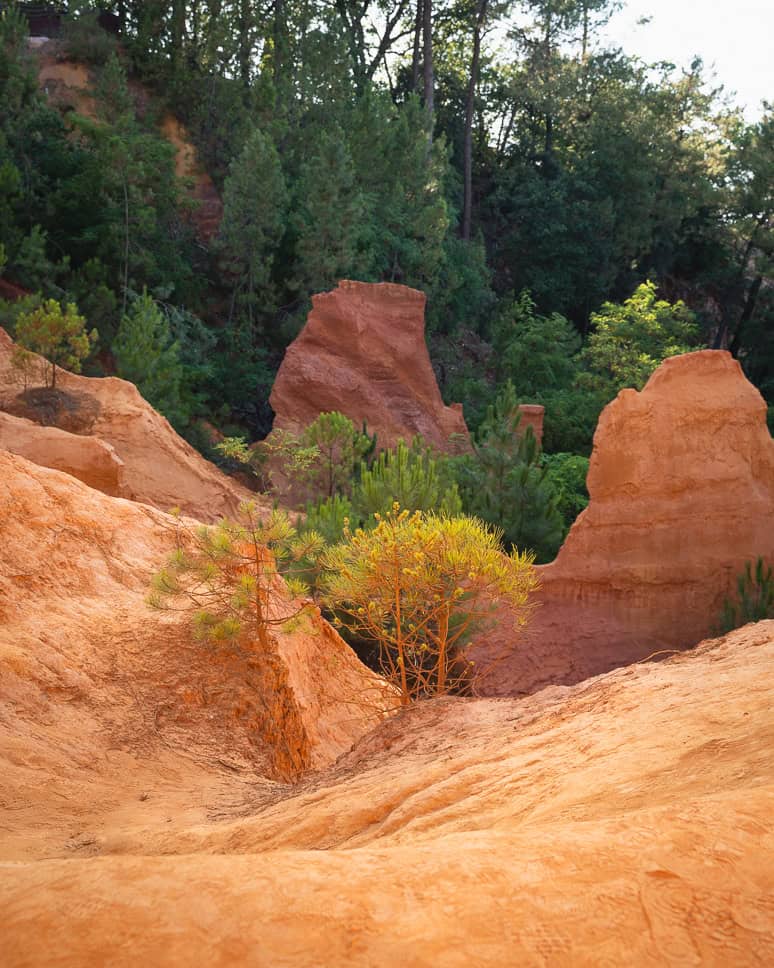
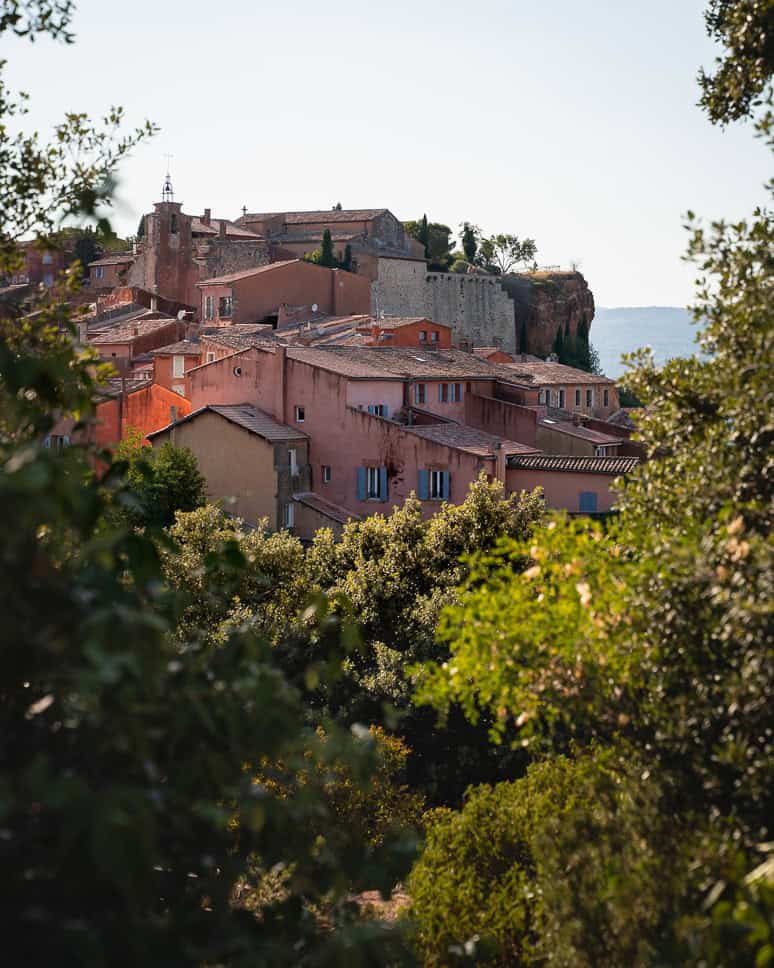
Roussillon is officially recognized as one of the most beautiful villages in France, and you notice that from a distance: the village sits on a hill, surrounded by greenery, right in the ocher landscape of the Luberon. In the past, ocher from nearby quarries was used to paint the facades, giving Roussillon its unique red-orange-yellow color palette today.
Wander leisurely through the narrow streets along facades in all shades of ocher, from soft yellow and warm orange to deep red, and plop down on a terrace with a view of the Luberon massif. The village is small, but thanks to the combination of colors, light, and distant views, you can easily hang around for a few hours.
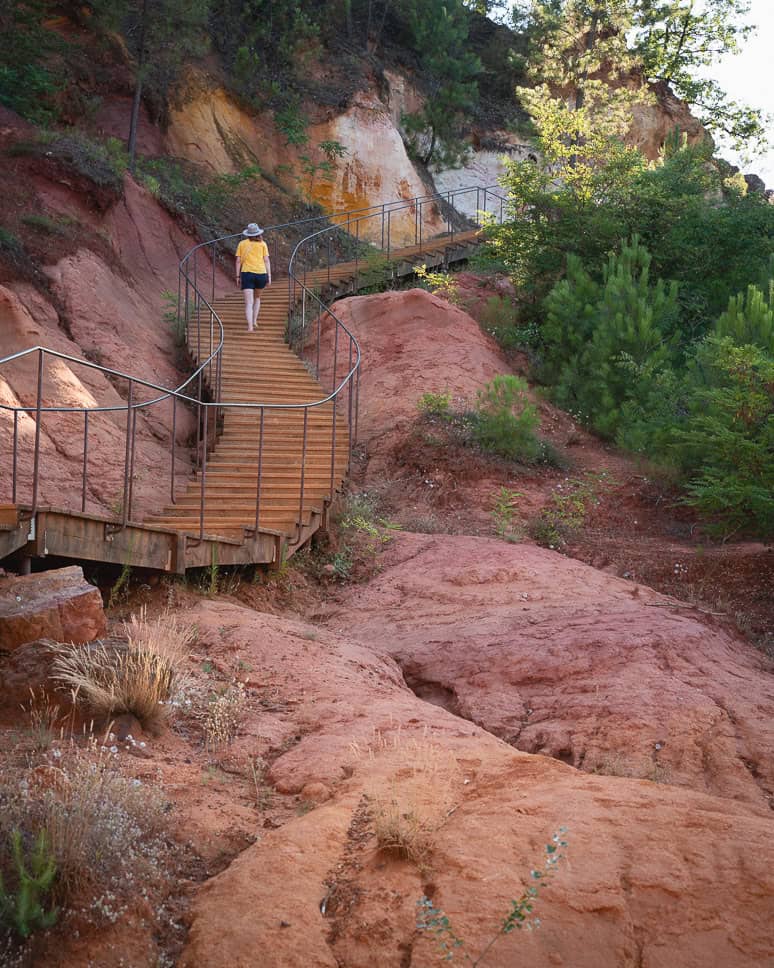
Don’t miss Le Sentier des Ocres, the walking trail through the old ocher quarry also known as the “Colorado of Provence.” Via wooden stairs and paths, you walk between vividly colored rock walls and mini-canyons; depending on the loop you choose, it takes about 35 to 60 minutes, with the most beautiful light around sunset and usually less crowds.
L’Isle-sur-la-Sorgue
L’Isle-sur-la-Sorgue is a short distance from Gordes, Roussillon, and Fontaine-de-Vaucluse and is one of the most atmospheric villages in Provence. It’s not called the “Venice of South France” for nothing: the Sorgue river splits into various channels with crystal-clear, cool water, past old watermills and with terraces everywhere along the banks.
Along those canals, you walk over little bridges and through narrow streets full of boutiques, art, and antique shops—a true paradise for those who love brocante and interior finds. Especially on Sundays, when the famous (antiques) market is held and the stalls are filled with antiques, local products, and other regional specialties, the whole village buzzes with atmosphere.
Les Baux de Provence
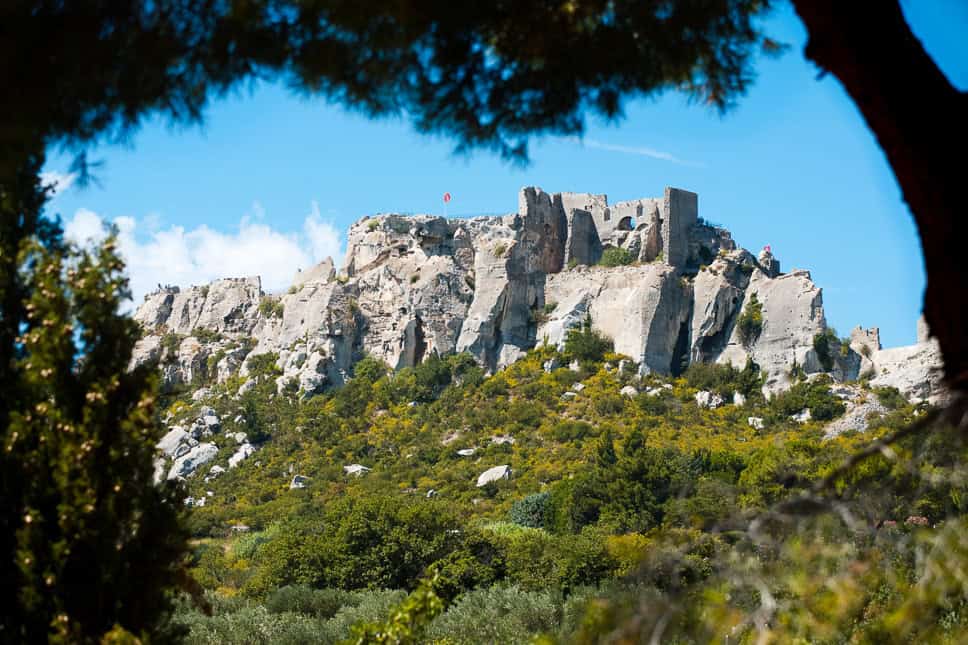
Les Baux-de-Provence sits atop a rocky plateau in the Alpilles mountains, northeast of Arles, with views stretching to the Camargue and, on clear days, almost to the Mediterranean Sea. The village has been inhabited for thousands of years, but most visitors today come for the spectacular ruins of the medieval fortress, which is literally built into and on the rock.
Take the time to wander through the castle ruins, climb the old towers, and enjoy the breathtaking panorama over the olive groves, vineyards, and hills of the Alpilles. Afterward, it’s delightful to get lost in the compact village itself, with its cobbled streets, stone houses, boutiques, art galleries, and cozy cafés that give the feeling of strolling through an open-air museum.
Lavender fields and Mont Ventoux
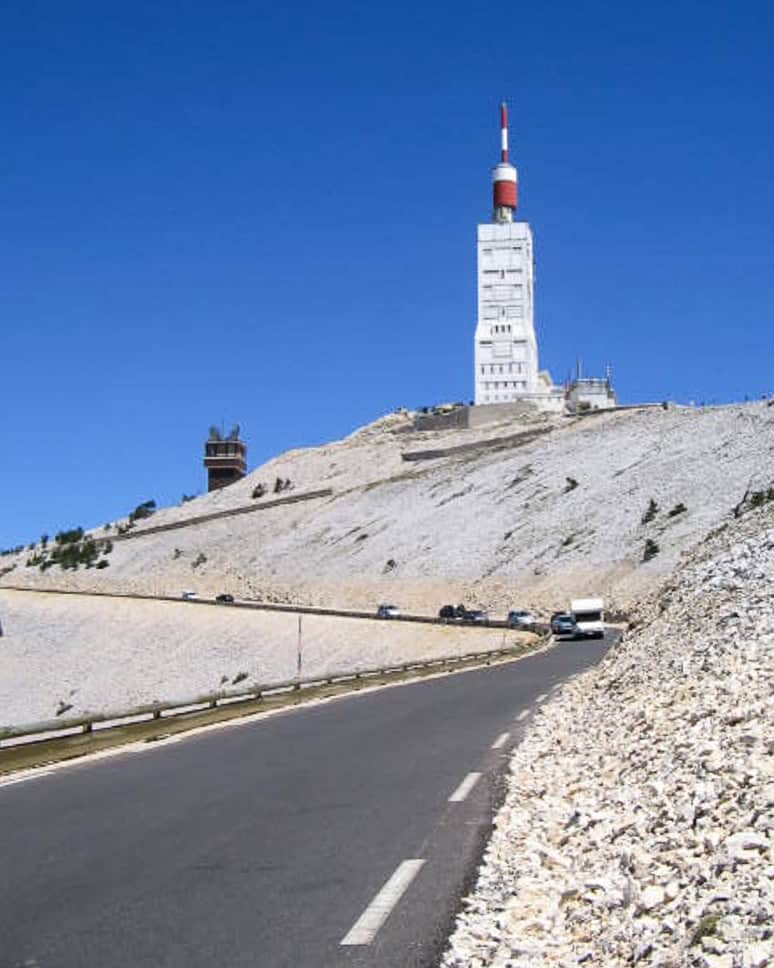
Mont Ventoux is the highest mountain in Provence and is part of a protected UNESCO biosphere reserve with a great variety of plants and animals. It is world-famous as a climb in the Tour de France and a true iconic eye-catcher during a road trip through South France.
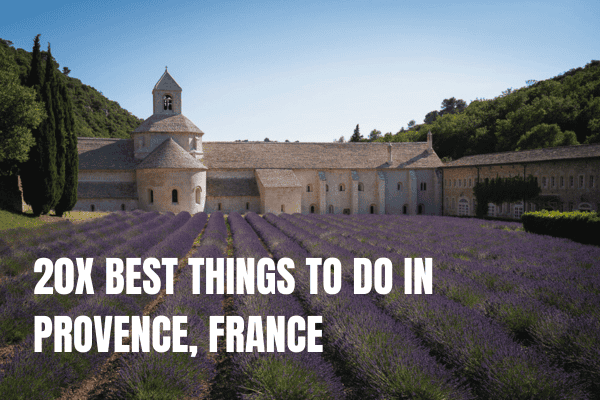
The “Giant of Provence” towers far above the landscape, with its bare, almost moon-like summit and the distinctive white tower as a beacon. Around the mountain, you’ll find a beautiful mix of forests, vineyards, and—especially toward Sault and the Plateau d’Albion—vast lavender fields that turn purple in summer.
You can climb Mont Ventoux by bike (only recommended if you’re an experienced climber), on foot via various hiking trails, or simply drive up by car. From the top, on clear days, you have a phenomenal view over Provence, the Alps, and even as far as Mont Blanc on the horizon.
There are multiple roads to the top, with the most famous routes starting in Bédoin, Malaucène, and Sault. Especially around Sault and the higher plateaus, many travelers combine a drive to Ventoux with a loop past the lavender fields, which are roughly in bloom from late June to early August.
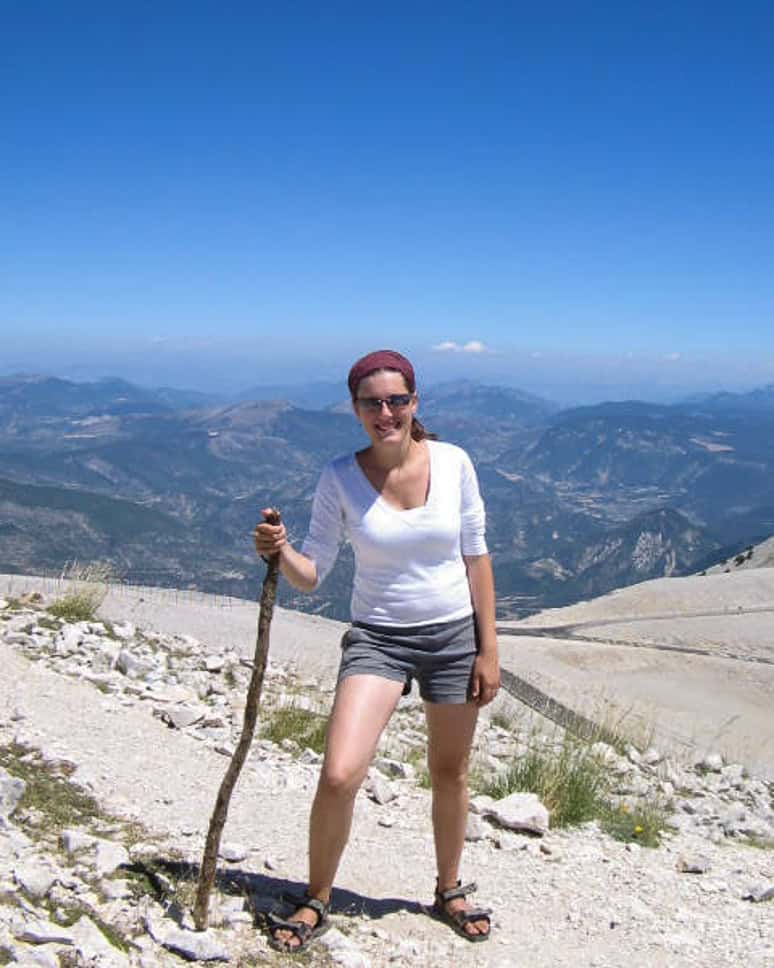
For those who want to hike, there are various marked trails from different altitudes, including routes that start from the villages on the flanks and climb upward, so you can beautifully experience the transition from vineyards and lavender to the rugged mountain landscape. We once hiked all the way to the top on foot!
It can also be fun to watch the Tour de France pass by here, but then you’d better be there quite early.
Gorges Du Verdon
The Gorges du Verdon is often considered one of the most beautiful gorges in Southern Europe and even the “Grand Canyon of Europe.” Its vibrant turquoise water, surrounded by steep rock walls up to hundreds of meters high, offers views you won’t soon forget.
The most beautiful way to experience the gorge is from the water: rent a kayak, canoe, SUP, or electric boat and paddle from Lac de Sainte-Croix into the gorge, as the rocks rise ever higher around you. Around the Verdon, you can also hike wonderfully, do various watersports, and with some luck spot griffon vultures circling high above, which have been reintroduced here. In summer, the water is warm enough for swimming; for less crowds and heat, aim for late spring or early fall.
You can drive one or more panoramic routes along the gorge by car, over bridges and winding mountain roads with countless viewpoints—like the Route des Crêtes or the lookout at Pont du Galetas. If you don’t have your own vehicle, organized tours will take you to the main highlights and viewpoints.
TIP: Just a short distance from the gorge lies Moustiers-Sainte-Marie, a spectacular village clinging to the cliffs that’s officially classified as one of France’s most beautiful villages. You wander through medieval streets full of faience workshops and gaze out over the lake and surrounding mountains—a perfect combo with a day at the Verdon.
Lac Saint Crox
The Lac de Sainte-Croix is a large turquoise reservoir between the Gorges du Verdon and the Plateau de Valensole, considered one of Southern France’s most beautiful lakes. The limestone bedrock gives the water its striking blue-green hue, surrounded by hills, forests, and lavender fields in the wider area.
Along the shores lie various beaches near villages like Sainte-Croix-du-Verdon, Les Salles-sur-Verdon, and Bauduen, where you can swim under supervision in summer and easily access the water. On and around the lake, you can rent electric boats, pedal boats, canoes, kayaks, SUPs, and sailboats—gasoline motorboats are prohibited, keeping it relatively calm and eco-friendly.
On the Gorges du Verdon side, you’ll find kayak and pedalo rental spots at Pont du Galetas and other recreation bases, so you can paddle straight from the lake into the gorge. For those seeking quieter spots, short hikes lead down to smaller, more hidden coves along the shore, where you can swim peacefully and enjoy the view.
The Camargue
The Camargue, the regional nature park in the Rhône Delta on the Mediterranean Sea, is a unique part of southern France with salt flats, lagoons, reed marshes, rice fields, and wide-open landscapes. The area is known as one of France’s best bird regions and feels almost like a Wild West by the sea.
Many visitors come specifically for the iconic residents: pink flamingos, grey-white Camargue horses, and black bulls, which have belonged to the landscape here for centuries. You can spot them on a jeep tour, horseback, by bike, or on a boat trip along the lagoons and étangs, where guides show you the most beautiful spots and wildlife.
Calanques National Park
If you’re seeking a spectacular coastline, you must explore Calanques National Park, with its impressive cliffs and turquoise waters. Calanque means cove, referring to the many inlets with steep walls leading to small pebble beaches.
Calanques National Park stretches from the seaside resort of Cassis to the city of Marseille and is one of the most beautiful regions in South France. And Calanque d’En Vau is the most beautiful of them all!
Calanques National Park is best explored on foot through its hiking trails. There’s a fantastic 8 km loop starting from Cassis that takes you to Calanque d’En Vau, with several stunning viewpoints and swimming spots along the way. You can park here to begin the hike or start from the town itself (allow an extra hour).
TIP: Another fun way to explore this region is from the water by booking a boat tour from Marseille or Cassis. Especially in July and August, when trails are sometimes closed due to fire risk. Then you can also swim and snorkel right away in the crystal-clear blue water.
Our favorite places to stay in Provence and South France
Are you looking for a charming vacation home in Provence with a pool, beautiful views, and a good location to visit all the sights of Provence? We’ve gathered some of our favorite addresses, spread across different regions, so you’ll always find a spot that fits your road trip in Provence.
There’s a modern vacation home near Malaucène, perfect if you want to stay close to Mont Ventoux and splash in a heated pool after a day of cycling or hiking. In the Luberon, you’ll find a cozy, boho-style cottage for two in Eygalières and a spacious family house near L’Isle-sur-la-Sorgue, with plenty of room for kids and a nice pool deck to unwind in the evening. Close to the Splashworld water park, also near L’Isle-sur-la-Sorgue, there’s this vacation home with a pool, ping pong table, and pétanque court.
Prefer something more luxurious? Then there’s a stylish address with an infinity pool near Mérindol-les-Oliviers, where you look out over the hills and vineyards. Also around Aix-en-Provence, Marseille (ideal for the Calanques and Cassis), and Arles, you’ll find some beautiful houses and mas-style accommodations with pools, quietly located but still close enough to villages, restaurants, and sights.
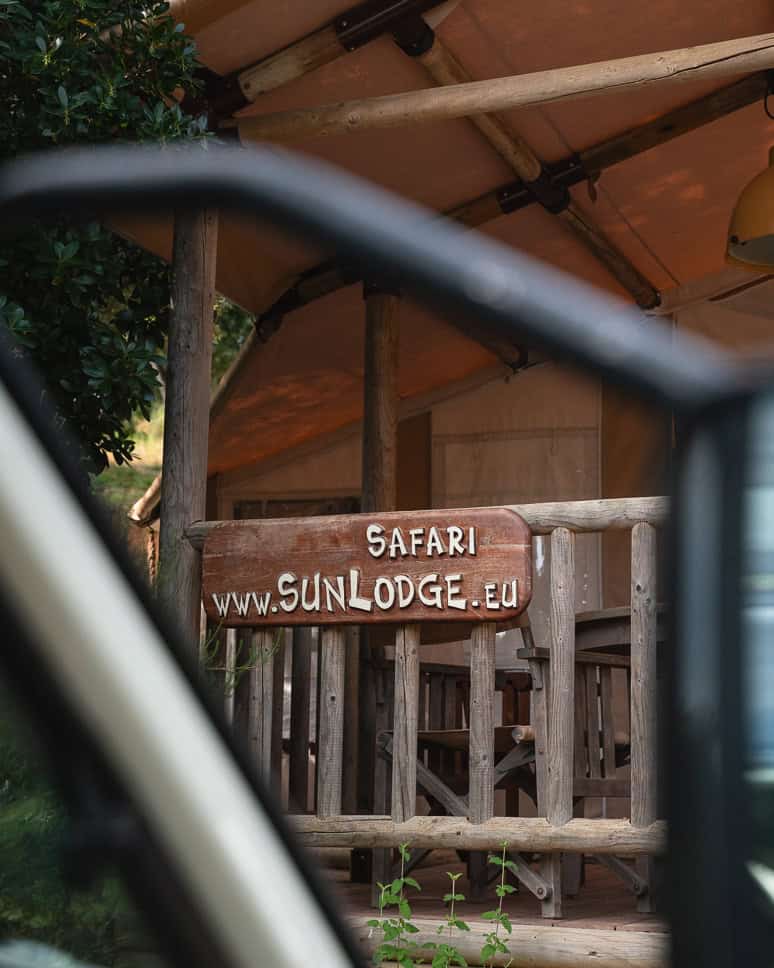
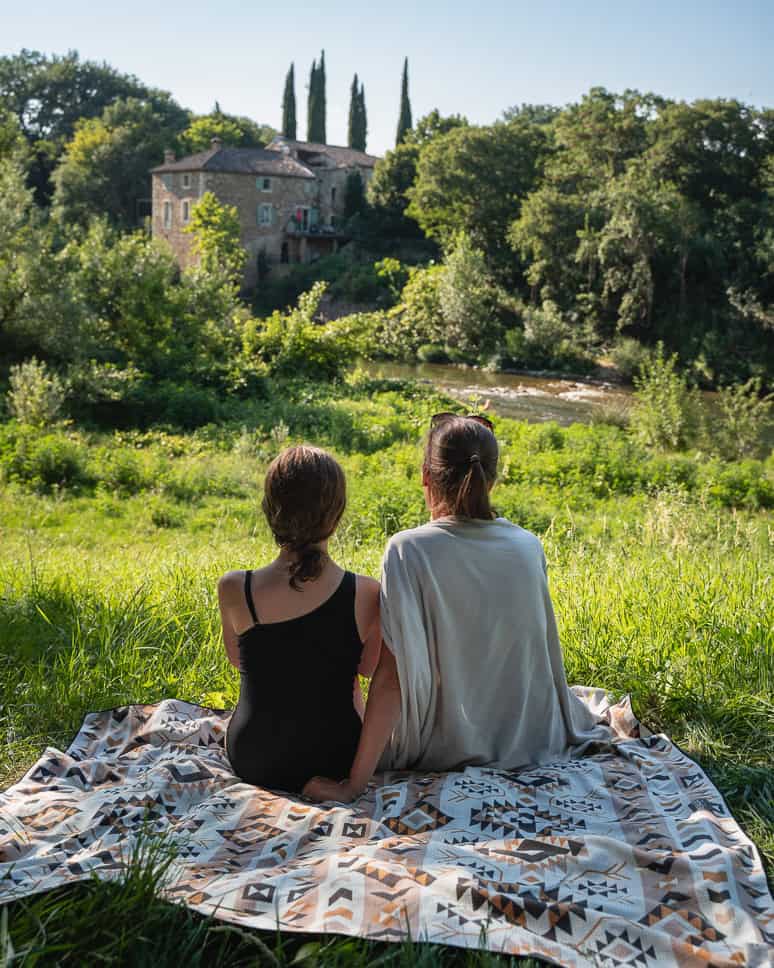
Want to go camping instead? Check out our article about our stay with Suncamps in Provence. We stayed in a fun glamping tent on the banks of a river—ideal for cooling off during hot summer days. Make sure to book well in advance if you’re traveling in the summer holidays, as the nicest campsites fill up fast. Take a look here for the coolest campsites in Provence.
SAVE THIS ARTICLE FOR PINTEREST
Our unfiltered opinion on our road trip through South France
We find South France and the Provence a fantastic vacation destination: atmospheric villages, beautiful nature, delicious food, and endless outings. In summer, it can get crowded and quite hot, especially at the most famous spots where you sometimes really have to hunt for a parking space. Still, that doesn’t bother us, as long as you adjust your rhythm a bit: head out early for sights and hikes, and in the afternoon relax by the pool or in the shade with a good book. This way, you get the best out of South France without going crazy from the crowds.