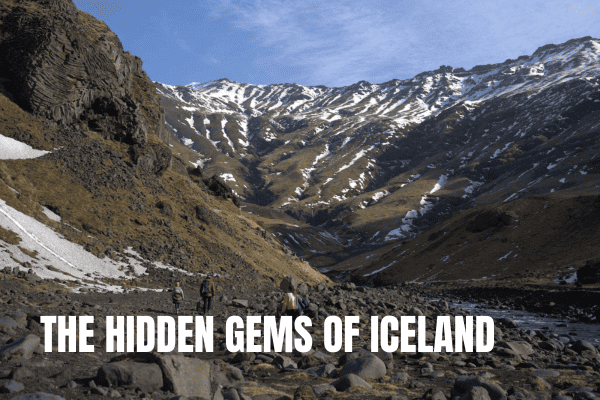
Everyone knows Iceland’s major attractions: the Golden Circle, the waterfalls along the south coast, and the Blue Lagoon. And to be fair, they truly are spectacular. But if you have a bit more time during your trip through Iceland, make sure to slow down and discover some of the many hidden gems as well.
A remote hot spring, a tiny fishing village, or a waterfall that seems to appear on no map at all—these are often the memories that stay with us the most. That feeling of having a small piece of Iceland all to yourself.
In this article, we’ll take you to some of those hidden gems. Places you won’t immediately find in guidebooks, but that add an extra layer of magic to this island. Read on to the end for some frequently asked questions about visiting remote spots in Iceland.
1. DISCOVER THE Westfjords
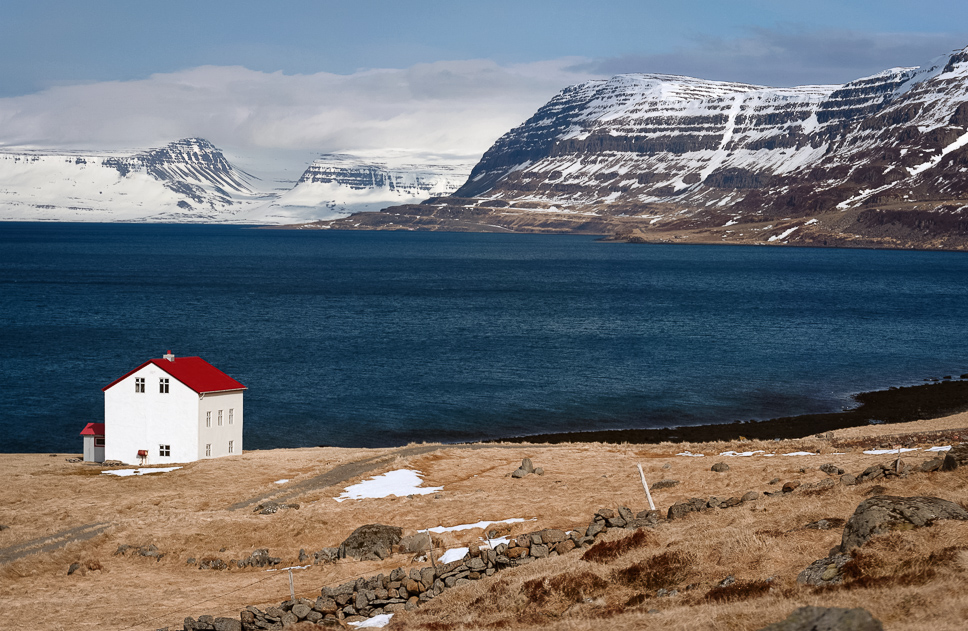
The entire Westfjords region can be considered a hidden gem. It is one of the most rugged and least visited areas of Iceland, and that’s exactly what makes it so special. Here, it truly feels like you’ve reached the end of the world. Think narrow roads winding along steep cliffs, small fishing villages tucked between fjords, and nature dominating every landscape.
The highlight is undoubtedly the mighty Dynjandi waterfall, cascading down the rocks like a broad veil. The bird cliffs of Látrabjarg—Europe’s westernmost point—are also magical, especially in summer when thousands of puffins come to breed. After a long hike, it’s wonderful to relax in the natural hot springs of Reykjafjarðarlaug or unwind on the red sands of Rauðisandur beach.
Want a great meal? Then you should definitely visit Tjoruhusid Restaurant in the small town of Ísafjörður. This hidden gem is famous for its delicious fish dishes and cozy atmosphere, and it’s a favorite among both locals and visitors.
It takes time and kilometers to reach the Westfjords (about 6 hours north of Reykjavik), but the reward is huge: silence, untouched wilderness, and landscapes that make your heart beat faster. For anyone who truly wants to travel off the beaten path, the Westfjords are a dream.
TIP: This area is best visited in summer, when the roads (often gravel or narrow and winding) are more passable and bird colonies can be visited safely. Keep in mind that some interior roads only open late in the season, and most routes are closed in winter. A 4×4 is definitely useful. For the Westfjords, plan at least 3–4 days. Always bring enough food, fuel, and warm clothing, as facilities are scarce and the nature here is unpredictably beautiful but also challenging.
2. Road trip along the Arctic Coast Way
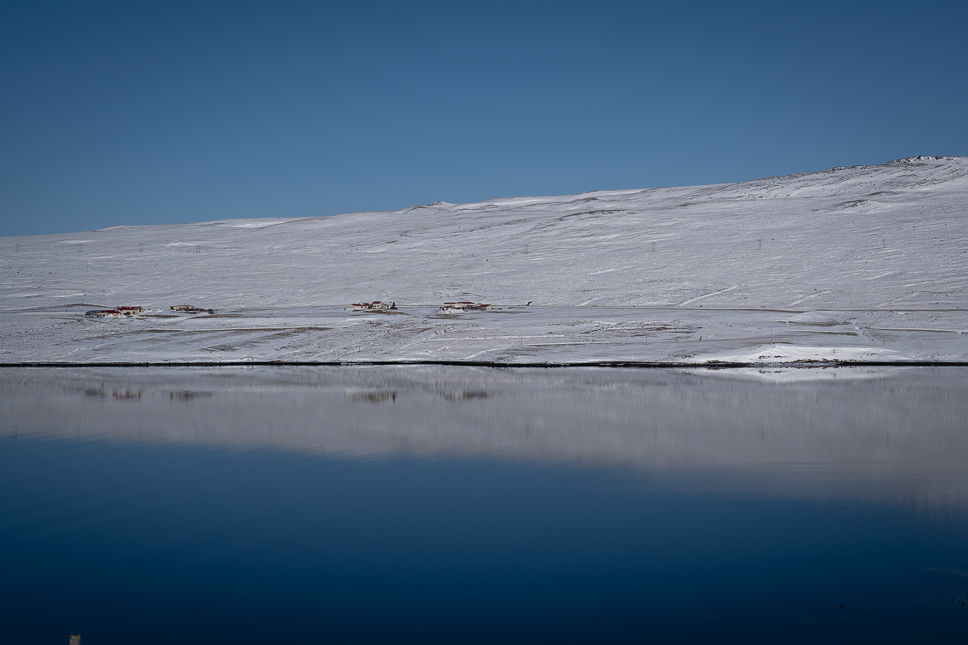
The Arctic Coast Way is one of Iceland’s lesser-known but incredibly beautiful routes, guiding you along the rugged northern coastline. Instead of following the classic Ring Road, you travel winding roads past fjords, small villages, lighthouses, and wide, empty beaches, with plenty of chances to spot whales or admire seabirds.
This route truly gives you the feeling of traveling off the beaten path: you’ll encounter hardly any tourists, yet you’ll find yourself face-to-face with untouched nature, picturesque fishing villages, and breathtaking views over the Arctic Ocean.
Along the way, you’ll pass some of Iceland’s more familiar sights, such as Húsavík (famous for whale watching) and Akureyri (the capital of the north). But you’ll mostly discover hidden gems: beautiful lighthouses, the Hofsós swimming pool, the black beach at Hvítserkur, the geothermal pools of Grettislaug, and so much more.
The Arctic Coast Way is perfect for anyone who loves quiet, unforgettable road trips and wants to experience just how wild and diverse North Iceland can be. Discover everything you need to know about the Arctic Coast Way here.
3. Go for a swim in Seljavallalaug Pool
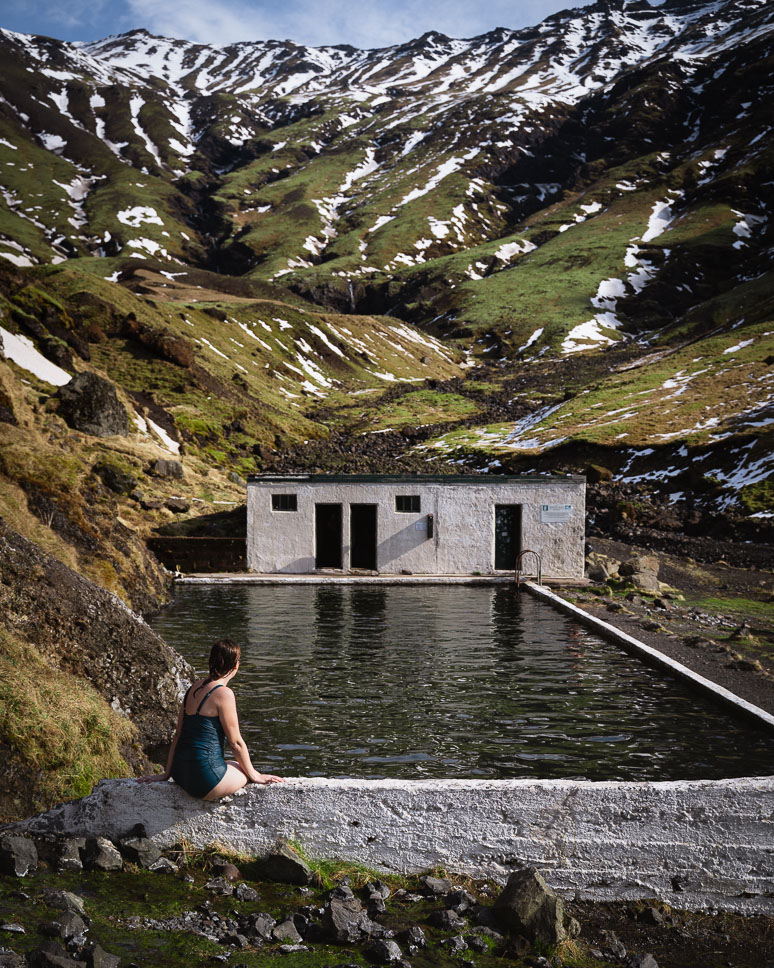
Hidden between the mountains on the south coast lies Seljavallalaug Pool, one of the oldest swimming pools in Iceland and definitely a special place to visit. Built in 1923 against the mountainside, the pool is filled with warm spring water that flows down from the rocks (though it can still feel a bit chilly).
It feels as if you’re swimming in the middle of a rugged natural landscape, surrounded by green hills. Don’t expect luxury: the pool is simple, the changing rooms are basic, and the water can be a bit cool or cloudy. But that’s exactly what gives the place its charm. And best of all, entrance is free.
From the parking area next to the farm, it’s about a 20–30 minute walk to reach this hidden gem. Even though it’s located along the popular south coast route, once you arrive it still feels like you’ve uncovered a secret spot. A dip in Seljavallalaug isn’t a wellness experience—it’s a step back in time: raw, pure, and unmistakably Icelandic.
4. Hike in the Hornstrandir Nature Reserve (Westfjords)
The Hornstrandir Nature Reserve is one of the most remote and lesser‑known places in Iceland, located on a peninsula in the northern part of the Westfjords, and it absolutely deserves its own mention. This area is famous for its untouched wilderness, stunning landscapes, and unique wildlife.
The reserve covers roughly 580 square kilometers and is home to Arctic foxes, seals, and many species of birds. It is also known for its dramatic, rugged coastline with towering cliffs and deep fjords.
Visitors to Hornstrandir can explore the area on foot, taking in breathtaking views of the surrounding mountains and the sea—without a doubt one of the best things to do in Iceland.
There are several hiking routes in the area, ranging from easier walks to more challenging treks that require a good level of fitness. Have a look at the beautiful Westfjords website for more information about this incredible part of Iceland. And check out the video below to prepare well for your visit.
5. VISIT the Hvítserkur ROCK
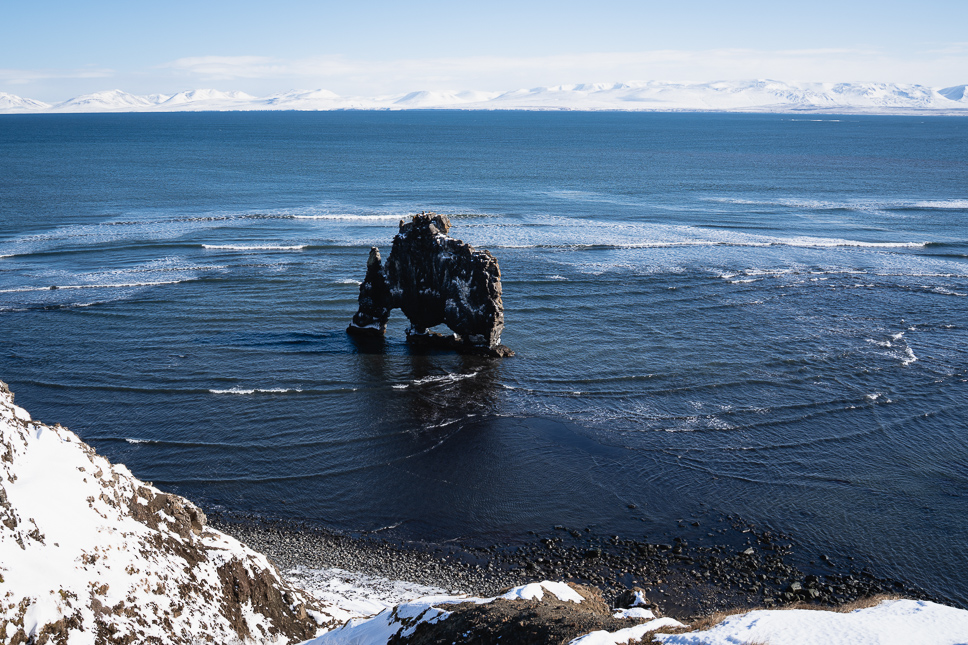
Located on the rugged northern coast of Iceland, you’ll find Hvítserkur, a striking rock formation that rises from the sea and looks a bit like an elephant or a dinosaur. We visited this unique spot during our road trip through Iceland and highly recommend it—not just for the rock itself, but especially for the surrounding landscape.
According to legend, Hvítserkur was once a troll who was caught by the sunlight and turned to stone. The name Hvítserkur means “white shirt” in Icelandic, likely referring to the white bird droppings that cover the rock.
You can reach the rock after a short walk from the parking area. At low tide, you can walk around it and admire its dramatic shapes up close. Do be careful, though, as the rocks can be slippery and the waves unpredictable.
It’s a place full of mystery and incredibly photogenic views (at sunrise or sunset, the rock even takes on a golden glow). Make sure to also take time to enjoy the wider surroundings. The black sand beach and the many seals make the spot even more special.
TIP: Be aware that this location gets some poor reviews on Google because many people seem unable to find it. But it’s definitely there—and absolutely worth a stop.


6. Admire Fjaðrárgljúfur Canyon
Fjaðrárgljúfur is one of those hidden gems of Iceland that is often overlooked by most travelers. This spectacular canyon, around 2 kilometers long and up to 100 meters deep, winds like a green emerald through the landscape, shaped by thousands of years of erosion by the Fjaðrá River.
Walking along the edge of the canyon, you’re treated to breathtaking views of twisting river bends, steep rock walls, and a landscape that feels almost fairytale-like. It’s a place where you can truly forget the world around you—and where your camera will be working overtime.
Although the canyon has become increasingly popular in summer (as many people include it on a road trip along Iceland’s South Coast), the sense of discovery and tranquility remains remarkably strong, especially if you visit at a quieter moment away from the crowds.

7. Stroll Through Seyðisfjörður
Another hidden gem in Iceland is Seyðisfjörður—one of the country’s most charming and picturesque villages. Tucked away between steep mountains at the end of a deep fjord in eastern Iceland, this small town is known for its colorful wooden houses, cozy cafés, small art galleries, and creative atmosphere. It’s a place where time seems to slow down.
You can enjoy leisurely walks along the river that flows through the village, visit the local art museum, or simply take in the views of the fjord and the surrounding mountains. Seyðisfjörður has something truly magical about it: a blend of tranquility, culture, and nature that makes it the perfect place to catch your breath during a Ring Road road trip or while exploring the Eastfjords.
TIP: Another small, quiet fishing village in the Eastfjords with a unique charm is Djúpivogur. With its colorful wooden houses, friendly locals, and views over the fjord, it also feels like a place where time has stood still.

8. Discover the Turf Houses of Glaumbær
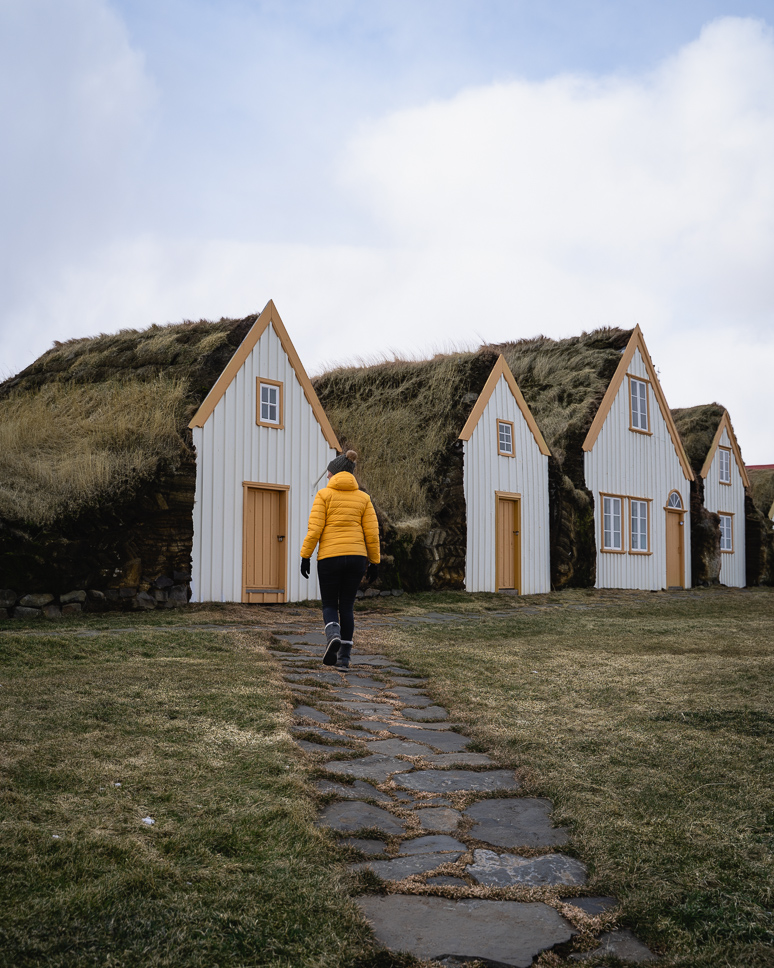
Glaumbær is one of those places where you instantly feel like you’re stepping back in time. This historic turf farm complex in northern Iceland dates back to the 18th century and has been beautifully preserved.
The traditional turf houses with their grass-covered roofs offer a unique glimpse into how Icelanders once lived in a harsh climate. As you wander around the grounds, you can almost feel the stories of generations of farmers who lived here. The small museum provides a fascinating insight into everyday life in the past.
Glaumbær is one of those lesser-known spots where you can take your time and experience Icelandic history, architecture, and traditions up close. On top of that, it’s wonderfully located—we really enjoyed strolling around here for a while.
TIP: If your Iceland trip focuses only on the South Coast, you can also visit the turf houses of Keldur. While we found Glaumbær slightly more impressive, they are definitely worth a stop as well.
9. Take a Photo at Ingjaldshólskirkja
One thing that immediately stands out when traveling through Iceland is the sheer number of churches dotting the landscape—from modern architectural landmarks to centuries-old turf churches hidden away in the countryside. Some are very well known, but most remain hidden gems, beautifully set within Iceland’s dramatic scenery.
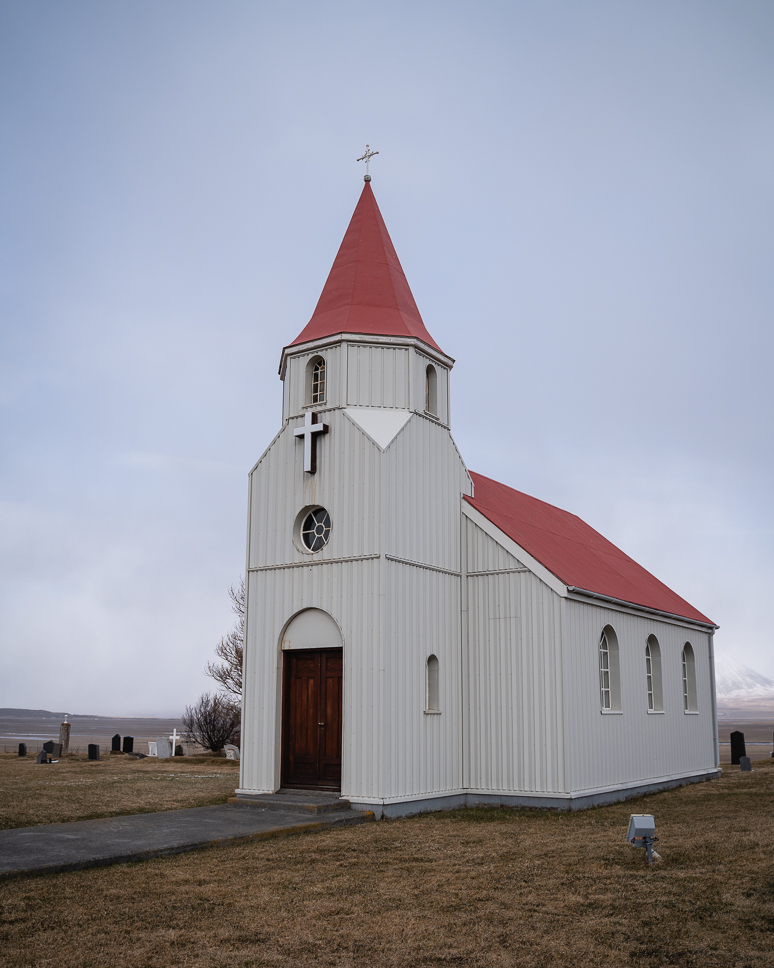
One of our favorites is Ingjaldshólskirkja, a small, picturesque church on the Snæfellsnes Peninsula. What makes it especially special is how photogenic it is, with snow-capped mountain peaks in the background and the road leading up to it. Take a walk around the church and have a quick look inside. For lovers of authentic and tranquil places, Ingjaldshólskirkja is a small discovery that adds something truly special to your journey.

10. Explore Stuðlagil Canyon
Stuðlagil Canyon is one of the more recent additions to Iceland’s list of impressive—and once off-the-beaten-track—natural wonders, and it’s an absolute eye-catcher. That said, it’s no longer entirely unknown these days.
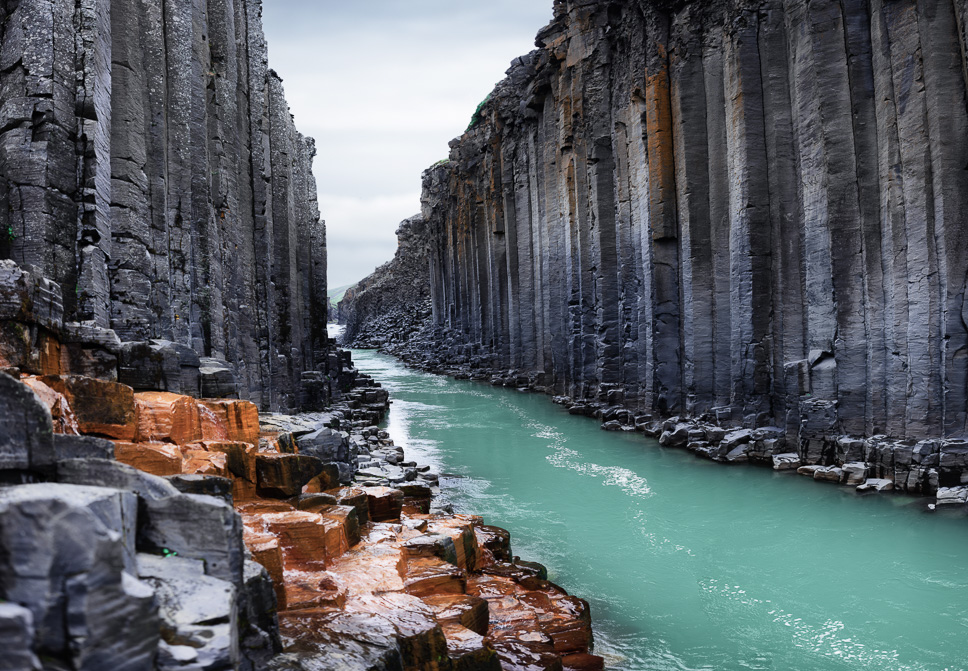
Carved by turquoise river water winding through black basalt, this canyon looks almost surreal. What makes Stuðlagil especially remarkable are the massive basalt columns lining the canyon walls, forming a striking geometric pattern. The walk along the canyon is relatively short yet breathtaking, and you can admire the unique colors and shapes both from the viewpoint above and from the water level itself.
TIP: To keep expectations realistic, it’s worth noting that Stuðlagil Canyon doesn’t always look the same. In winter, everything is covered in snow and reaching the water isn’t possible due to icy paths. In summer, the river can be calm and turquoise (as in the photo), but it can also turn grey or brown and become fast-flowing after heavy rainfall.
11. Visit the Svörtuloft Lighthouse
Along Iceland’s rugged coastline, you’ll find lighthouses everywhere—often brightly colored and sometimes located in the most remote places. They may seem small compared to the overwhelming natural surroundings, but for centuries they have been life-saving beacons for sailors navigating the often treacherous waters around the island. Each lighthouse has its own character and story.
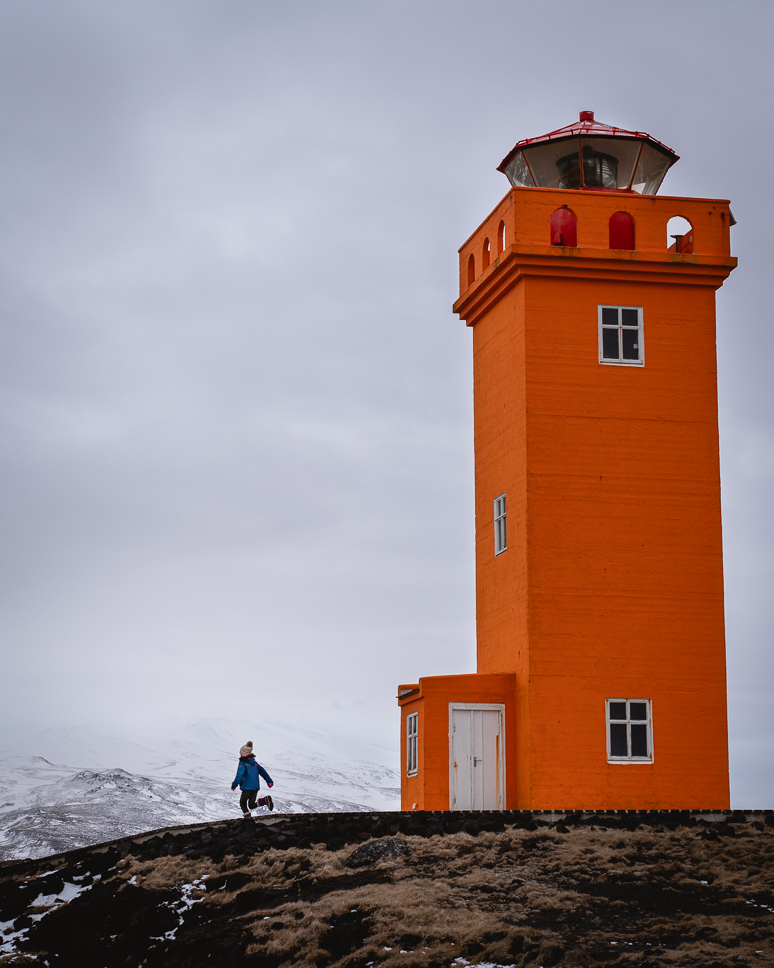
One of our favorites is the Svörtuloft Lighthouse, located at the very western tip of the Snæfellsnes Peninsula. The bright orange tower stands out beautifully against the mountains and the endless ocean, which crashes against the coast with raw force here. It feels as if you’re standing at the edge of the world. The wind howls, the waves pound the rocks, and the lighthouse silently watches over the shoreline—a magical place that perfectly illustrates how nature and human presence come together in harmony in Iceland.
Read more: What to wear when visiting Iceland in winter + packing list
12. Seek Out One of Iceland’s Many Hidden Waterfalls
Iceland is home to an incredible number of waterfalls—estimates often mention more than 10,000. Some are world-famous and truly impressive, such as Gullfoss, Skógafoss, and Seljalandsfoss. But there are also countless hidden and remote waterfalls waiting to be discovered.
Reaching these hidden gems often requires a walk or even a hike along unpaved trails or through quiet valleys, which makes the experience even more special. Some waterfalls cascade gracefully into narrow gorges, while others plunge down wide, rugged steps. All of them are surrounded by the raw landscapes that make Iceland so unique.
Some examples:
- Gljúfrabúi: Located near the famous Seljalandsfoss but hidden behind a narrow gorge. A short walk through the canyon brings you right up close to the waterfall.
- Kvernufoss: Close to the well-known Skógafoss, yet far less visited. You can walk behind the waterfall and enjoy a serene, peaceful setting.
- Glymur: Iceland’s second-highest waterfall, hidden within a canyon. It can be reached via a hike of about 7 km, crossing suspension bridges and rivers—an adventure in itself.
- Hjálparfoss: Tucked away in the Þjórsárdalur valley in South Iceland, featuring an impressive double cascade that flows into a picturesque pool surrounded by basalt formations.
- Svartifoss: Located in Skaftafell National Park, famous for its black basalt columns, yet often less crowded than the major South Coast waterfalls.
- Háifoss: One of Iceland’s tallest waterfalls, also situated in the Þjórsárdalur valley near Hekla. Its impressive height and remote location make it a true discovery.
- Hraunfossar: The name literally means “lava waterfalls.” This site features dozens of small streams seeping from the Hallmundarhraun lava field over a stretch of about 900 meters.
- Barnafoss: Just 50 meters from Hraunfossar lies Barnafoss, meaning “Children’s Waterfall.” According to legend, two children fell from a natural stone bridge into the river and drowned.
The beauty of these lesser-known waterfalls is that you often have them all to yourself. A moment of peace and wonder, far away from the crowds at the tourist hotspots. For nature lovers, these are the places where you can truly feel the magic of Iceland.

13. Admire a Turf Church in Iceland
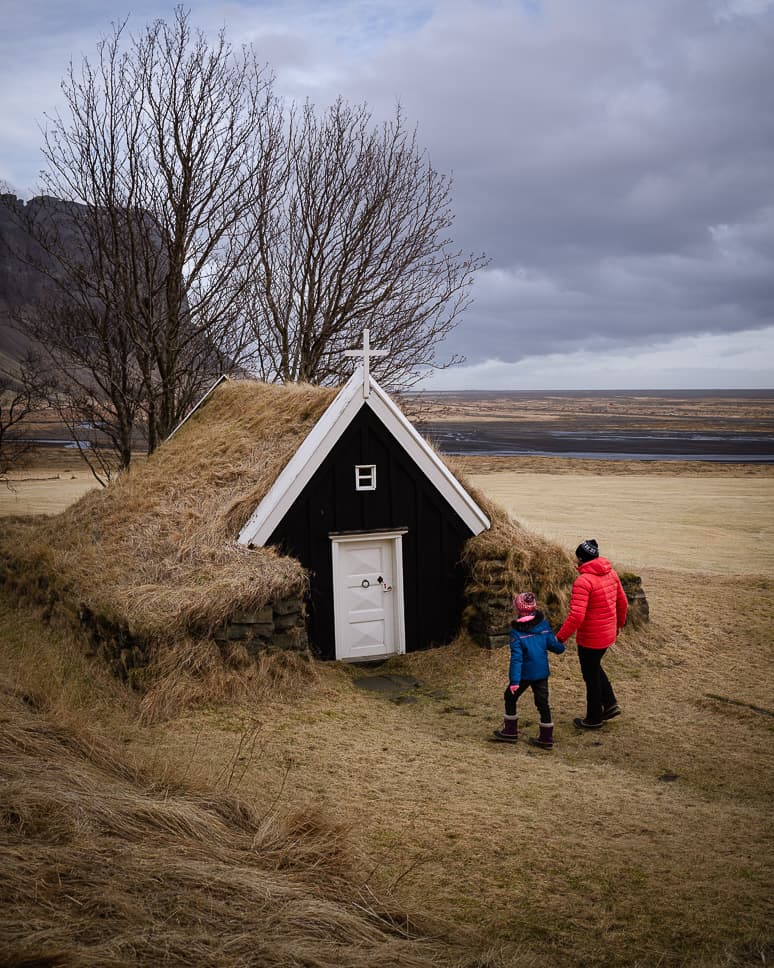
Núpsstaðakirkja is one of those idyllic, authentic turf churches you can still find in Iceland. Since it (along with Hofs Church) is located in the southwest, it’s relatively easy to reach.
With its classic wooden structure and grass roof, it exudes a calm, timeless charm. It feels like stepping out of the modern world for a moment. The church is beautifully nestled between green hills and wide-open landscapes, making every photo look almost postcard-perfect. Núpsstaðakirkja is small, quiet, and incredibly photogenic—a true hidden gem for anyone who loves both culture and nature.
The most beautiful and oldest turf church in Iceland is probably Grafarkirkja, located in North Iceland along the Arctic Coast Way. Here, you can truly feel the history and lifestyle of Icelanders from long ago. This church is also exceptionally photogenic, set in a stunning landscape.
TIP: We visited Iceland in April, when the snow has just started melting and the grass still looks dry and brown. To see the turf churches and houses at their best, it’s best to visit between mid-May and September.
14. Discover Iceland’s Highlands
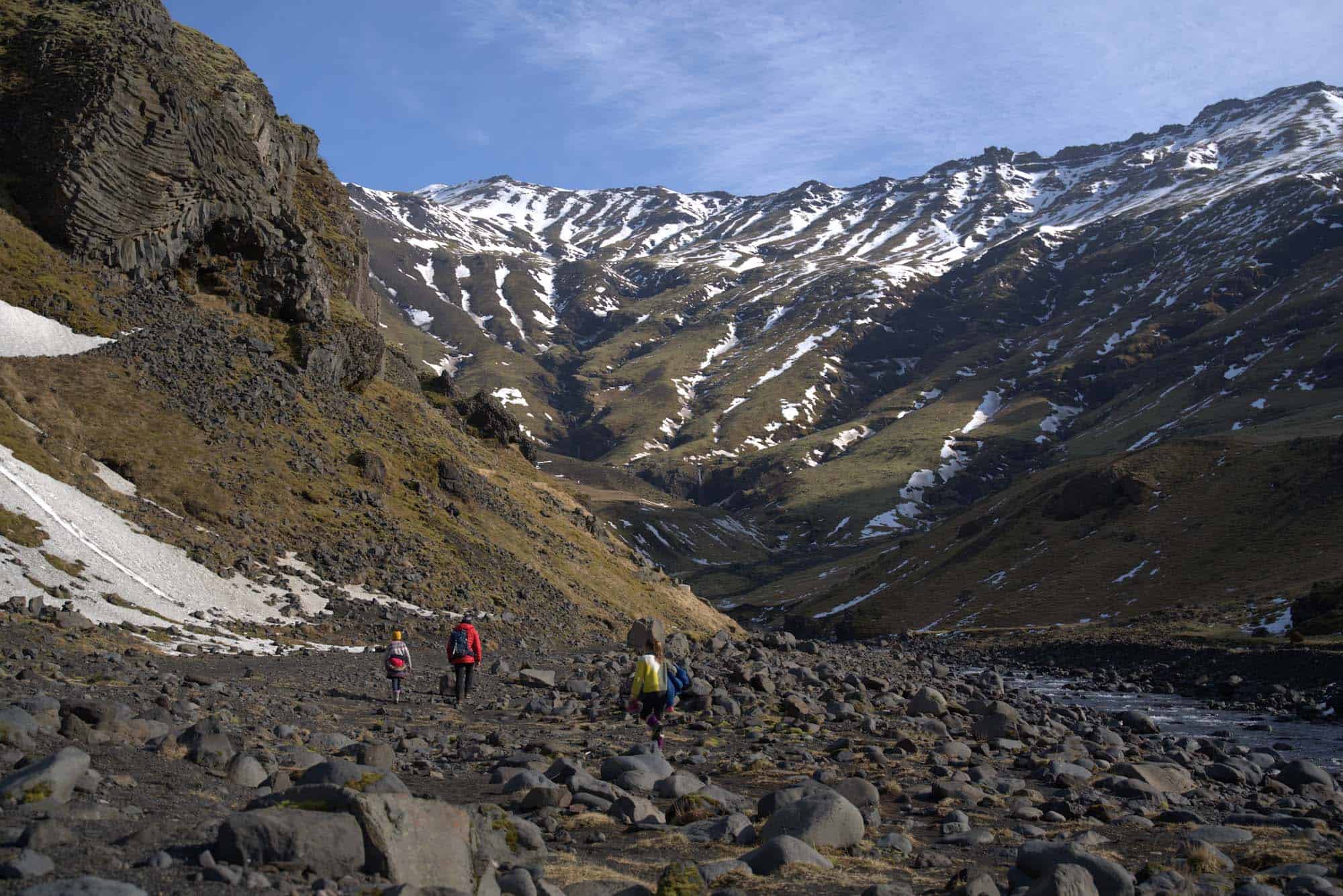
Iceland’s Highlands are the rugged, deserted heart of the island. It’s a place where you truly feel like you’re completely alone in the world. Vast lava fields, colorful rhyolite mountains, wild rivers, and mysterious valleys alternate in a landscape that feels almost otherworldly.
Some of the highlights include Landmannalaugar (famous for its colorful rhyolite mountains), Þórsmörk (a green valley surrounded by glaciers and peaks), the Askja crater (an impressive crater lake and moon-like terrain), Hveravellir (hot springs and steaming mud pools), the Þjórsárdalur valley (with its beautiful waterfalls), and the Sprengisandur route (a challenging F-road through the expansive highlands).
TIP: This area is barely populated and only accessible in summer. You’ll often travel via unpaved F-roads that require a 4×4 vehicle. The adventure begins as soon as you start driving these roads, with every turn revealing new panoramas that take your breath away.
Frequently Asked Questions About Hidden Places in Iceland
Are these hidden places easy to reach?
Some are, while others require a bit more adventure. Often the most beautiful spots are found via gravel roads or small detours. And sometimes you’ll need to hike because you can’t reach them by car. In winter, access can be more difficult or even impossible, so always check road conditions on SafeTravel.is or Road.is. Read our article about driving in Iceland in winter for more info.
Do I need a 4×4 to reach these places?
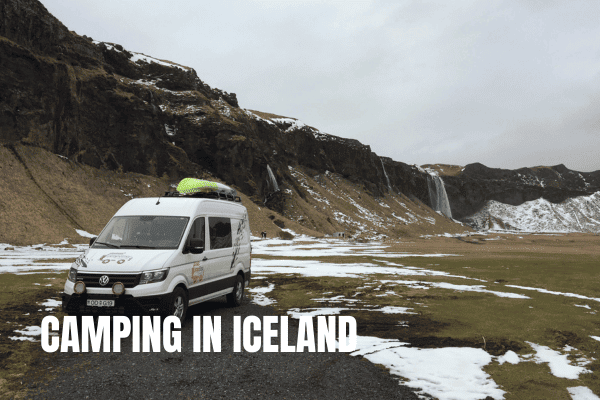
For most of the lesser-known spots, you don’t need a 4×4. However, it is recommended for many remote areas, especially in winter. We drove around Iceland in winter with a 4×4 camper.
Can I camp near these hidden gems?
No—wild camping is no longer allowed in Iceland. You must stay at official campsites (which are often beautiful) or at nearby accommodations. Read more in our article about camping in Iceland.
Are these hidden places really quiet, or will I still encounter many tourists?
Compared to popular highlights like the Golden Circle or the Blue Lagoon, these places are much quieter. You can sometimes even have them all to yourself. Still, the closer you get to summer and the more accessible the location, the higher the chance of meeting other travelers. But even then, the atmosphere remains unique.
What is the best time to discover these hidden gems?
Summer (June–August) is the most practical time: long days, better accessibility, and easier roads. In winter, some places are unreachable. But winter also offers the magic of snowy landscapes and the chance to see the Northern Lights.
Our Tips for Planning Your Trip to Iceland
- Best time to visit Iceland: Depending on what you want to see, but generally May, June, September, and October (November–February for the Northern Lights).
- How to get to Iceland: Fly to Iceland’s international airport in Keflavík (book cheap tickets via Cheaptickets). If you don’t rent a car at the airport, take a bus or private transfer to Reykjavik. You can also reach Iceland by ferry from Denmark (even with your own car or camper).
- Transportation in Iceland: Our advice is to rent a car (we always compare prices with Rentalcars), or travel around Iceland by camper (like we did with CampEasy).
- Where to stay in Iceland: There are fantastic accommodations spread across Iceland in nature or in towns such as Reykjavik, Selfoss, Vik, Höfn, and Akureyri. Check our article on our favorite places to stay in Iceland for more ideas.
- Local dishes you should not miss: Skyr (Icelandic yogurt), Harðfiskur (dried fish snack), Kjötsúpa (lamb soup), the famous Pylsa (hot dog), Rúgbrauð (dark rye bread), Hákarl (fermented shark), Plokkfiskur (fish stew).
- Most beautiful attractions in Iceland: Reykjavik, Blue Lagoon, Skogafoss waterfall, Reynisfjara black beach, Þingvellir National Park, Kirkjufell, Mývatn, Jökulsárlón glacier lagoon, Vatnajökull National Park, and many more.
- Fun activities in Iceland: Spot the Northern Lights, visit an ice cave, go whale watching, do a glacier hike, snorkel between two tectonic plates.
- Stay online: Want easy internet with unlimited data? Get an eSIM for Iceland (with a 5% discount).
- Budget tip: Sometimes there are transaction fees when withdrawing cash or paying at restaurants. You can reduce these costs by using a Wise account with an attached bank card. You can request a free Wise card here.
Save this article for later on pinterest
Our other articles about Iceland